
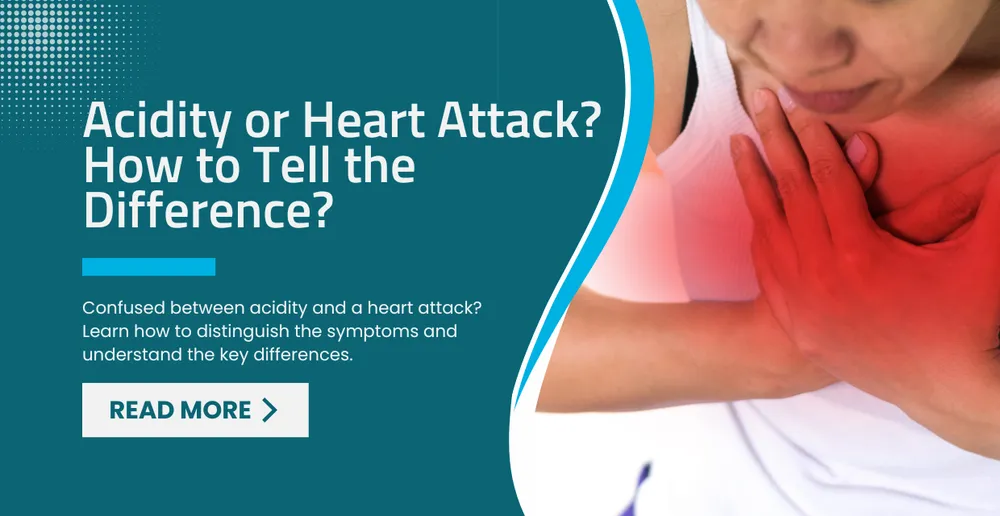
Acidity or Heart Attack: How to Tell the Difference
It’s late at night, and you suddenly feel a sharp, burning sensation in your chest. Your mind starts racing: Is it just the spicy food I had for dinner, or is this something more sinister? This confusion is incredibly common. Because the esophagus (the food pipe) and the heart are located close to each other in the chest, they share common nerve pathways. This means that acidity—often called heartburn—and a heart attack can feel remarkably similar.
However, distinguishing between the two is a matter of life and death. At LifeCare Hospitals Kenya, our emergency departments frequently see patients who either panicked over mild indigestion or, more dangerously, waited too long to seek help for a cardiac event thinking it was just "gas." In this guide, we break down the subtle and not-so-subtle differences between acidity and a heart attack to help you make the right call.
Understanding Acidity and GERD
Acidity occurs when stomach acid flows back up into the esophagus. This condition is formally known as Gastroesophageal Reflux Disease (GERD). Because the lining of the esophagus is not designed to handle acid, it becomes irritated, leading to a burning sensation in the center of the chest, usually right behind the breastbone.
Common Symptoms of Acidity
- Burning Sensation: Usually worse after eating or when lying down.
- Regurgitation: A sour or bitter taste in the back of the throat.
- Relation to Food: Symptoms often improve with antacids or by sitting upright.
- Bloating: A feeling of fullness or excessive gas in the upper abdomen.
Understanding a Heart Attack (Myocardial Infarction)
A heart attack occurs when the flow of blood to a part of the heart muscle is blocked, usually by a blood pool or a buildup of plaque. Without oxygenated blood, the heart muscle begins to die. Unlike acidity, which is primarily a digestive issue, a heart attack is a systemic cardiovascular failure.
Common Symptoms of a Heart Attack
- Pressure or Heaviness: Often described as an "elephant sitting on the chest" rather than a burning sensation.
- Radiation: Pain that moves to the neck, jaw, back, or down the left arm.
- Shortness of Breath: Feeling winded even while sitting still.
- Cold Sweats: Breaking out in a clammy, cold sweat for no apparent reason.
- Nausea and Lightheadedness: Feeling faint or dizzy.
The Silent Heart Attack: A Special Warning
It is important to note that not all heart attacks present with crushing chest pain. "Silent heart attacks" are common, especially in women, the elderly, and individuals with diabetes. In these cases, the primary symptom might be unexplained fatigue, a feeling of mild "indigestion," or a subtle discomfort in the neck or jaw. If you have risk factors like hypertension, high cholesterol, or diabetes, you should be hypersensitive to any unusual sensation in your torso.
Comparison Table: Symptoms at a Glance
| Feature | Acidity (Heartburn) | Heart Attack |
|---|---|---|
| Type of Discomfort | Burning, sharp sensation | Pressure, squeezing, heaviness |
| Location | Behind breastbone, moves up | Center of chest, may radiate to arm/jaw |
| Triggers | Spicy food, lying down flat | Physical exertion or emotional stress |
| Shortness of Breath | Rare | Very common |
| Effect of Antacids | Usually provides quick relief | No effect on the pain |
When it is a Medical Emergency
If you experience chest pain that lasts for more than 10 to 15 minutes, or if the pain is accompanied by shortness of breath and sweating, you must treat it as a medical emergency. Do not drive yourself to the hospital; call for an ambulance or have someone drive you.
Diagnostic Procedures at LifeCare Hospitals
When you arrive at LifeCare with chest pain, we follow a rapid-response protocol:
- ECG (Electrocardiogram): Done within minutes to check for electrical abnormalities in the heart.
- Troponin Test: A blood test to detect specific proteins released when the heart muscle is damaged.
- Endoscopy: If the heart is cleared, our gastroenterologists may perform an endoscopy to examine the esophagus for signs of GERD or ulcers.
Living with Confidence: Prevention Strategies
Regardless of whether your pain is from acidity or your heart, the underlying causes are often manageable lifestyle factors. Improving your diet, managing your weight, and dealing with chronic stress will benefit both your digestive and cardiovascular systems.
For acidity, avoid eating within three hours of bedtime and limit intake of caffeine and fatty foods. For heart health, ensure you are getting regular aerobic exercise and monitoring your cholesterol levels annually at a LifeCare multi-specialty facility.
Conclusion: Better Safe than Sorry
The human body is complex, and symptoms can be misleading. While we hope it is "just gas," our medical team at LifeCare Hospitals Kenya is trained to prepare for the worst while hoping for the best. Never feel embarrassed about coming to the ER for a heart attack that turns out to be acidity. We would much rather send you home with a prescription for antacids than have you stay home and suffer a life-altering cardiac event.
With our 24/7 emergency care and world-class specialists, LifeCare is your safety net in times of medical uncertainty. Stay informed, listen to your body, and never ignore the signs.
Frequently Asked Questions (FAQs)
Can anxiety cause chest pain that feels like a heart attack?
Yes, panic attacks can cause severe chest pain, racing heart, and sweating. However, it is impossible to distinguish from a heart attack without an ECG, so emergency medical evaluation is always required.
Does drinking milk help with acidity?
Milk can temporarily buffer stomach acid, but the fat in whole milk can actually trigger more acid production later on. Low-fat milk or water is generally better.
Can lying on my left side help acidity?
Yes, because of the anatomy of the stomach, lying on your left side makes it harder for acid to flow up into the esophagus.
Are women's heart attack symptoms different?
Often, yes. Women are more likely to experience nausea, back pain, and extreme fatigue rather than the "classic" crushing chest pain.