
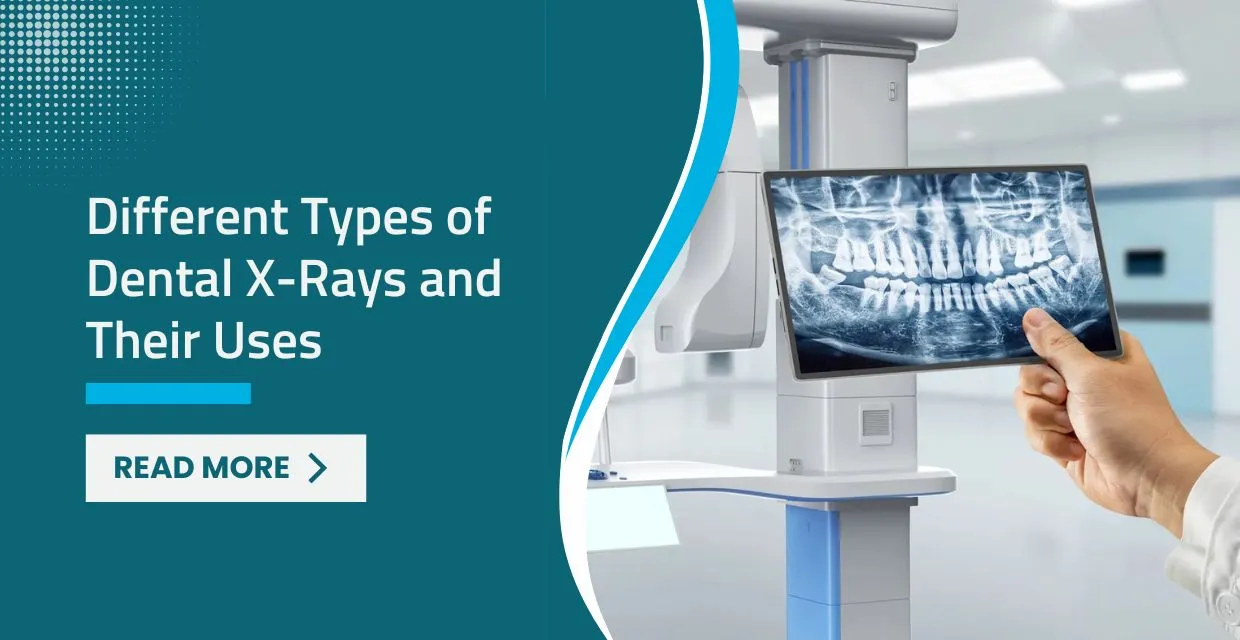
Understanding the Different Types of Dental X-rays
A visual exam of your teeth and gums is only half the story. To see what's happening beneath the surface—within the tooth, under the gum line, and in the bone—dentists use X-rays. At LifeCare Hospitals, we use advanced digital imaging technology that provides high-quality images with significantly less radiation than traditional film. (Learn more about Dental X-ray Safety).
Depending on your current oral health and any symptoms you're experiencing, our dental specialists may recommend different types of X-rays. Here's a guide to the most common varieties and what they show.
Intraoral X-rays (Taken inside the mouth)
These are the most common type and provide a high level of detail for specific teeth.
1. Bitewing X-rays
These show the crowns of the upper and lower teeth in one area. They are excellent for identifying decay between teeth and changes in bone density caused by gum disease.
2. Periapical X-rays
A periapical X-ray shows the entire tooth, from the crown to the end of the root where it anchors in the jaw. These are vital for planning a Root Canal Treatment or identifying abscesses.
3. Occlusal X-rays
Occlusal X-rays are larger and show the full arch of teeth in either the upper or lower jaw. These are often used in children to check the development of permanent teeth.
Extraoral X-rays (Taken outside the mouth)
These provide a broader view of the teeth, jaw, and facial structure.
1. Panoramic X-rays
A panoramic X-ray captures the entire mouth in a single image. It is particularly useful for visualizing wisdom teeth, identifying jaw problems, and planning orthodontic treatments. They are also standard in Prenatal Dental Consultations to check for any underlying infections.
2. Cephalometric Projections
These show the entire side of the head. Orthodontists use them to understand the relationship between the teeth and the jaw, helping them plan braces or other alignment treatments.
3. Cone Beam CT (CBCT)
This advanced imaging creates a 3D view of the teeth, soft tissues, nerve pathways, and bone. It is essential for complex procedures like dental implants or oral surgery. (Compare this to Standard CT vs. MRI).
Why Dental X-rays are Essential
Without X-rays, many dental problems would go unnoticed until they cause significant pain or permanent damage. They allow our team at LifeCare Hospitals Kenya to:
- Detect cavities between teeth.
- Identify bone loss and gum disease.
- Locate infections at the root of a tooth.
- Monitor the development of teeth in children.
- Plan restorative procedures like crowns and bridges.
Conclusion: Precision for a Healthier Smile
At LifeCare Hospitals, we prioritize both diagnostic accuracy and patient safety. By using the right combination of imaging techniques, we ensure that your dental care is tailored to your specific needs, helping you maintain a healthy, confident smile for years to come.
Frequently Asked Questions (FAQs)
How often do I need dental X-rays?
Frequency depends on your oral health history, age, and risk factors. Healthy adults with no recent decay may only need them every 12 to 24 months, while children often need them more frequently.
Can I get dental X-rays while pregnant?
Yes. Digital X-rays use very low radiation, and we always use a lead apron for protection. Dental health is critical during pregnancy, and identifying infections is safer than leaving them untreated.