
Early Detection: Your Ultimate Shield Against Breast Cancer
Breast cancer is a formidable opponent, but it is not invincible. In fact, when breast cancer is detected early—before it has a chance to spread to other parts of the body—the 5-year survival rate is close to **99%**. The problem we face in Kenya is not a lack of treatment, but a lack of *early* treatment.
Far too many women in our communities wait until they feel pain or see a visible change before seeking help. Unfortunately, breast cancer is often "silent" in its early, most treatable stages. At LifeCare Hospitals, we believe that empowerment through knowledge and screening is the most powerful medicine we can offer. in this guide, we break down why early detection works and the steps YOU must take to protect yourself.
1. The Power of the Monthly Self-Exam
No one knows your body better than you. Once a month (ideally 3-5 days after your period ends), you should perform a self-exam.
- Look: Stand in front of a mirror with your hands on your hips. Look for any dimpling, puckering, or changes in the skin texture of your breasts.
- Feel (In the Shower): Use the pads of your fingers in a circular motion to feel for any hard lumps, thickening, or "knots" in the breast and up into the armpit.
- Nipple Check: Look for any unusual discharge or if the nipple has suddenly turned inward.
2. The Gold Standard: Mammography
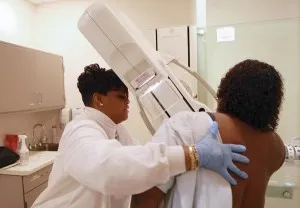
A mammogram is a specialized X-ray of the breast.
- Who: We recommend all women in Kenya start annual screenings at age 40. if you have a family history of breast cancer, you may need to start earlier.
- What to expect: The breast is momentarily compressed between two plates to get a clear image. It may be slightly uncomfortable for a few seconds, but it is life-saving.
- The Benefit: It can find "calcifications"—tiny spots that are the very first signs of a problem, often invisible on an Ultrasound.
3. Breast Ultrasound: The Helpful Partner
For younger women (who often have denser breast tissue) or for examining
a specific lump, we use **Breast Ultrasound**.
Ultrasound uses sound waves to see if a lump is solid (possibly a tumor)
or filled with fluid (a simple cyst). It is completely painless and uses
no radiation. At LifeCare, we often combine Mammography and Ultrasound
for the most accurate diagnosis possible.
4. What if Something is Found?
If a suspicious area is detected, we move to a **Biopsy**.
Using a thin needle (Fine Needle Aspiration) or a slightly larger one
(Core Biopsy), our radiologist takes a tiny sample of the cells. These
cells are examined by a **Pathologist** under a microscope. This is the
only way to know for 100% certain if cancer is present. At LifeCare, we
pride ourselves on "Rapid Diagnosis"—getting your results back quickly
so you don't have to wait in fear.
5. Debunking the Myths of Breast Cancer
Myths can kill. Let's clear the air:
- Myth: "Breast cancer only happens to old women."—Truth: While more common with age, we are seeing more cases in women in their 20s and 30s in Nairobi.
- Myth: "If I don't feel pain, it's not cancer."—Truth: Early-stage breast cancer is almost never painful. Pain usually only occurs when a tumor is quite large.
- Myth: "Men don't get breast cancer."—Truth: About 1% of breast cancer cases occur in men. Men should also report any unusual lumps under the nipple.
6. Precision Oncology at LifeCare Hospitals
We provide a "Circle of Care" for breast health:
- Digital Mammography: Our machines provide lower radiation doses and higher resolution images than older analog versions.
- Multi-Disciplinary Team (MDT): Your case is not just handled by one doctor. Our Surgeons, Oncologists, and Radiologists meet to discuss the best path forward for YOU.
- Compassionate Support: We understand the emotional weight of breast health. Our nurses and counselors are here to walk with you every step of the way.
Conclusion: Take Charge of Your Protection
Early detection is not just a medical recommendation; it's an act of love for yourself and your family. By making screening a regular part of your life, you are taking the power away from cancer.
LifeCare Hospitals Kenya is your dedicated partner in **Breast Health Excellence**. Our mission is to ensure that every woman in Kenya, from Kisumu to Mombasa and Nairobi to Eldoret, has access to the world-class screening she deserves. Your brilliance is matched by your strength; let's work together to protect it. Book your mammogram or breast screening at any LifeCare branch today. We are here to help you see the truth and protect your future.
Frequently Asked Questions (FAQs)
Does wearing an underwire bra cause breast cancer?
**No.** There is no scientific evidence that bras, deodorant, or breast trauma (being hit in the breast) cause cancer. The main risks are age, genetics, and hormonal factors.
I found a lump. What should I do now?
**Don't panic, but don't wait.** Most lumps are benign. Book an appointment with a doctor immediately for a clinical exam. We will likely order an Ultrasound or Mammogram to get more information.
Does a mammogram hurt?
It involves pressure for a few seconds which can be uncomfortable or slightly painful for some. To make it easier, avoid booking your mammogram the week before your period when breasts are most sensitive.
Is breast cancer hereditary?
Only about **5-10%** of cases are caused by inherited gene mutations (like BRCA1/2). Most breast cancer occurs in women with NO family history. This is why screening is important for everyone, not just those with a family history.