
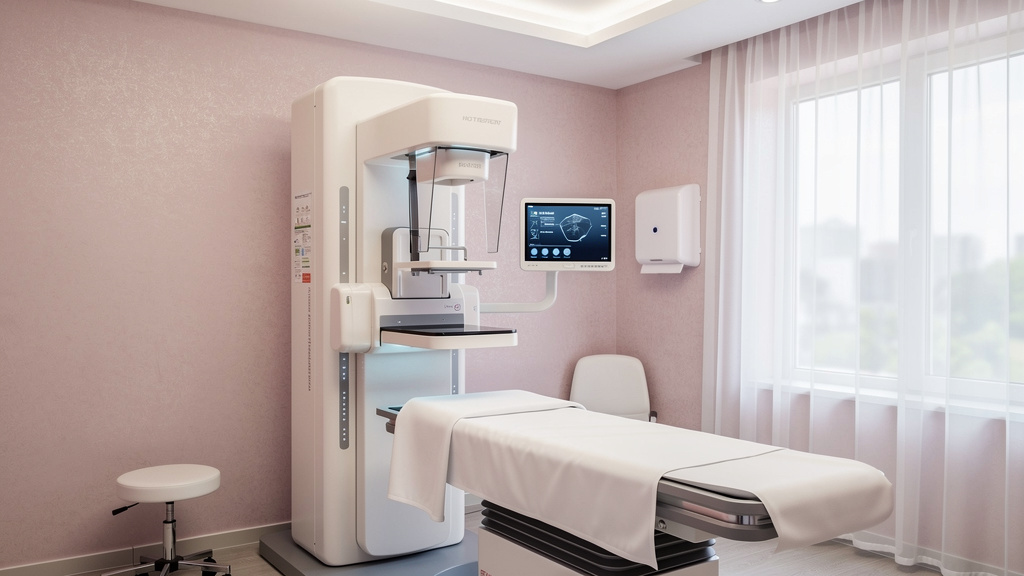
Is There Any Radiation Risk with Mammography? Putting the Facts in Perspective
Breast cancer remains the leading cause of cancer deaths among women in Kenya. The most powerful tool we have to fight this disease is early detection through mammography. Yet, many women avoid this life-saving screening because of a specific fear: **radiation**.
It is a common question in our radiology departments: "If radiation can cause cancer, isn't it dangerous to get a mammogram every year?" At LifeCare Hospitals Kenya, we believe that informed patients make the best health decisions. in this blog, we provide a deep dive into the actual radiation risk of mammography, the science of modern imaging, and why the "Risk vs. Benefit" ratio is overwhelmingly in favor of screening.
1. Understanding Ionizing Radiation
Mammography uses a very low dose of X-rays—a form of ionizing
radiation—to create a picture of the breast tissue. Ionizing radiation
has enough energy to potentially damage the DNA in cells.
However, our bodies are remarkably good at repairing this kind of minor
damage. The risk only becomes significant when the total dose is
extremely high, which is NOT the case with a mammogram.
2. The Actual Dose: How Small is it?
Radiation is measured in **millisieverts (mSv)**.
- Mammogram Dose: Approximately 0.4 mSv for two views of both breasts.
- Natural Background Radiation: About 3.0 mSv per year (from the sun, soil, and even the food you eat).
- Chest CT Scan: Approximately 7.0 mSv (over 17 times more than a mammogram).
- Flight from Nairobi to London: Approximately 0.05 mSv (due to higher altitude).
3. Why Digital Mammography Changed Everything
At LifeCare Hospitals, we use **Digital Mammography**. Unlike the older
"film" mammograms, digital sensors are far more sensitive to X-rays.
This means we can get a much clearer, higher-resolution image using a
**lower dose of radiation**. Digital technology also allows radiologists
to zoom in and adjust the contrast of the image, reducing the need for
"repeat" scans that would add to the radiation dose.
4. Risk vs. Benefit: The Life-Saving Math
The theoretical risk of a mammogram causing a cancer later in life is
estimated to be about 1 in 1,000,000.
In contrast, the risk of a woman developing breast cancer in her
lifetime is **1 in 8**.
Mammography can detect a tumor up to **3 years** before it can be felt
during a physical exam. Detecting cancer at this early stage increases
the 5-year survival rate to nearly **99%**. When you look at the
numbers, the tiny, theoretical risk of radiation is dwarfed by the
massive, proven benefit of catching cancer early.
5. Who Should and Should NOT Worry?
While safe for most, we follow strict protocols:
- Pregnant Women: We generally do not perform mammograms on pregnant women because the developing fetus is more sensitive to radiation. We use Ultrasound instead.
- Young Women (under 40): Breast tissue in younger women is denser and more sensitive. Unless you are at very high genetic risk, we typically recommend starting mammograms at 40.
- Annual vs. Biennial: For most women over 50, even an annual mammogram for 30 years straight does not reach a cumulative radiation level considered "dangerous" by international safety boards.
6. Safety Measures at LifeCare Hospitals
We take every precaution to ensure your safety:
- Precision Equipment: Our machines are calibrated monthly to ensure the lowest effective dose.
- Lead Shielding: While rarely necessary for mammography (due to the focused nature of the beam), we have thyroid shields available for concerned patients.
- Expert Technicians: Our female radiographers are trained to position you perfectly the first time, eliminating the need for extra exposures.
Conclusion: Don't Let Fear Stop Your Prevention
The fear of radiation should never be the reason a woman in Kenya skips her mammogram. The technology we use at LifeCare Hospitals is designed with patient safety as the absolute foundation. A mammogram is a quick, safe, and essential part of a modern woman's healthcare toolkit.
Early detection doesn't just save lives; it saves breasts by allowing for less invasive treatments. If you are 40 or older, or have a family history of breast cancer, book your screening today. Our compassionate imaging team is here to answer your questions and provide the clarity you need. Your health is worth much more than a tiny, calculated risk. Let’s stay ahead of breast cancer, together.
Frequently Asked Questions (FAQs)
Does compression increase radiation risk?
**No.** In fact, compression is a safety feature! By flattening the breast tissue, the X-rays have less tissue to penetrate, which actually **lowers** the required radiation dose and makes the image clearer.
Is a breast ultrasound better than a mammogram?
Ultrasound has zero radiation, but it is **not** a replacement for mammography. Ultrasound cannot see "micro-calcifications," which are often the very first signs of breast cancer. We usually use them together for a "Gold Standard" evaluation.
Does a mammogram cause the cancer to spread?
**No.** This is a dangerous myth. The compression and the low-dose X-rays have no physical or biological ability to cause a tumor to "release" cells or move to other parts of the body.
Should I avoid deodorant for my mammogram?
**Yes.** Many deodorants and powders contain tiny metallic particles (like aluminum) that can show up on the X-ray as "white spots." These can be mistaken for calcifications, leading to unnecessary worry or repeat scans. Wash your underarms before the appointment and apply deodorant *after*.