
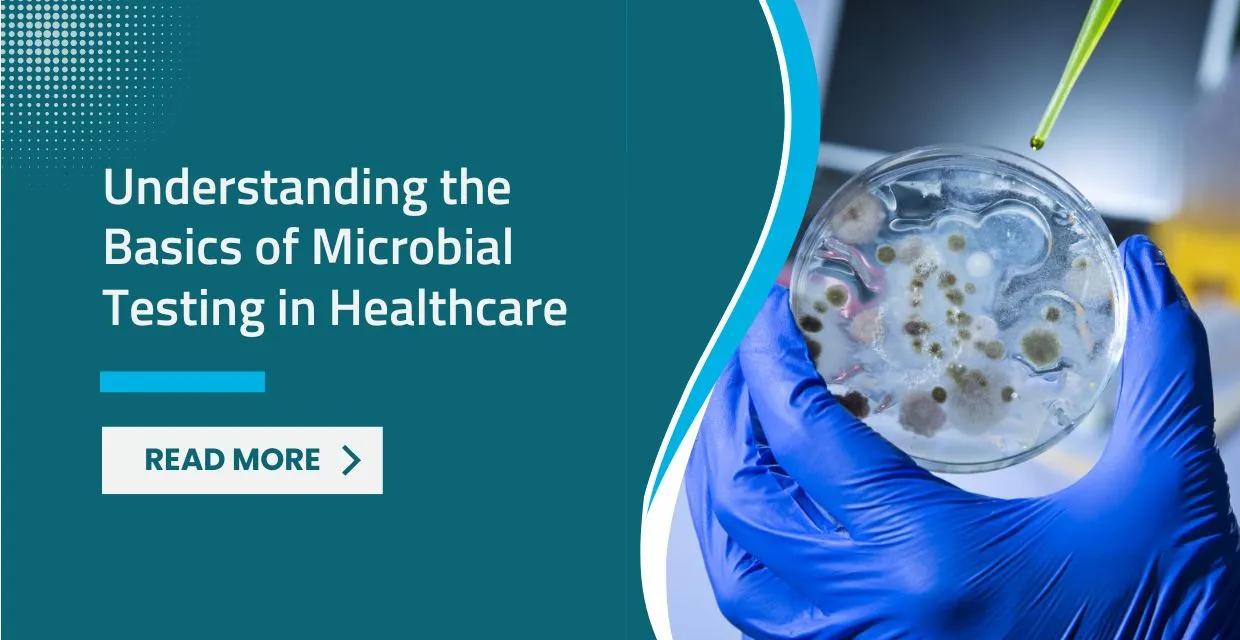
Understanding the Basics of Microbial Testing in Healthcare: The Hidden Battle
When you go to the hospital with a severe fever, a persistent cough, or an infected wound, you are likely asked for a sample—blood, urine, or perhaps a swab. While you wait for your results, a team of specialized scientists at LifeCare Hospitals Kenya is performing a complex piece of detective work called **Microbial Testing**.
The world is full of microscopic life: bacteria, viruses, fungi, and parasites. Most are harmless, but some are deadly. Identifying exactly which "tiny passenger" is causing your illness is the difference between a quick recovery and a worsening condition. in this blog, we pull back the curtain on the microbiology lab to help you understand what happens to your sample and why it is critical for your care.
1. What is Microbial Testing?
Microbial testing is the clinical process of identifying the specific pathogen (germ) in a
patient's body. It isn't just about saying "you have an infection"—it's about pinpointing
exactly which species is involved.
At LifeCare Hospitals, our microbiology department uses three main methods:
- Culture Methods: We "grow" the germs in a special gel (Agar) to see what they look like.
- Microscopy: Looking at them under powerful magnification after using special dyes (Grams Staining).
- Molecular Testing (PCR): Searching for the unique DNA of the germ. This is extremely fast and accurate.
2. The Core Process: Culture and Sensitivity (C&S)
This is the most common test we perform. It happens in two vital stages:
- Stage 1: The Culture: Your sample is placed in a "Petri dish" and put in an incubator that mimics human body temperature. Over 24 to 48 hours, a single bacterium can multiply into a visible cluster called a "colony."
- Stage 2: Sensitivity Testing: This is the most important part. Once we know what the bacteria is, we test it against dozens of different antibiotics. We see which medicine kills the bacteria and which ones the bacteria is "resistant" to. This allows your doctor at LifeCare to prescribe the **exact** antibiotic that will work, rather than a "broad spectrum" one that might not.
3. Why Does it Take So Long?
One of the most frequent questions we get is, "Why do I have to wait 3 days for my urine
culture?"
Biological life has its own speed. Bacteria like *E. coli* grow quickly, but others like those
that cause Tuberculosis (TB) can take weeks to grow. We cannot rush nature. However, LifeCare
has invested in automated systems that alert our lab the second growth is detected,
significantly reducing wait times compared to traditional methods.
4. The Different Types of Samples
Where the sample comes from tells us a different story:
- Blood Cultures: Used when an infection has entered the bloodstream (Sepsis). This is a medical emergency and requires the highest level of laboratory precision.
- Urine Cultures: The Gold Standard for diagnosing urinary tract infections (UTIs).
- Sputum/Throat Swabs: Used for respiratory infections like pneumonia or strep throat.
- Wound Swabs: To ensure that a surgical site or injury is healing without bacterial interference.
5. Combating Antibiotic Resistance
Antibiotic resistance is a global health crisis. It happens when bacteria evolve and "learn"
how to beat our medicines.
By performing microbial testing, we practice "Antibiotic Stewardship." Instead of giving
everyone the "strongest" medicine, we give the *right* medicine. This protects both the patient
(from unnecessary side effects) and the community (by not creating "superbugs").
6. Safety and Quality at LifeCare Labs
A lab result is only as good as the lab that performed it.
- Sterile Protocols: Our lab scientists work under strict biosafety hoods to prevent cross-contamination.
- Internal Quality Control: We run "control samples" every day to ensure our machines and chemicals are performing at 100% accuracy.
- Expert Pathologists: Every positive microbial result is reviewed by a consultant pathologist to ensure the clinical interpretation is correct.
Conclusion: Precision for Your Protection
The next time your doctor at LifeCare Hospitals asks for a laboratory test, remember that they are calling on a specialized team of scientists to look into the invisible world and find the answers needed to heal you.
At LifeCare Hospitals Kenya, we don't believe in guesswork. We believe in the power of science, the precision of our laboratories, and the expertise of our clinicians. Our microbial testing department is at the heart of our commitment to your safety and rapid recovery. Trust the lab, trust the science, and trust LifeCare to get you back on your feet. Your health is built on accurate answers.
Frequently Asked Questions (FAQs)
Can a lab test be wrong?
While rare, no test is 100% perfect. However, by using "multiple modalities" (like looking at the bacteria AND growing it), LifeCare reduces the margin of error to near zero. Following sampling instructions (like "mid-stream" urine) is your part in ensuring accuracy.
Does a microbial test detect viruses like the flu?
Traditional "cultures" are for bacteria and fungi. For viruses, we use **Molecular (PCR)** testing or **Antigen** testing. LifeCare labs are equipped for all these modern diagnostic platforms.
What is a "Gram Stain"?
It is a quick method of coloring bacteria so we can see them under a microscope. "Gram Positive" bacteria turn purple and "Gram Negative" turn pink. This helps us categorize them in minutes while we wait for the 48-hour culture.
Can I be tested if I am already taking antibiotics?
It is better to take the sample **before** starting antibiotics. Once you take the medicine, it may "stun" the bacteria so they won't grow in the lab, even if they are still alive in your body. Always tell the lab staff if you have already started any medication.